
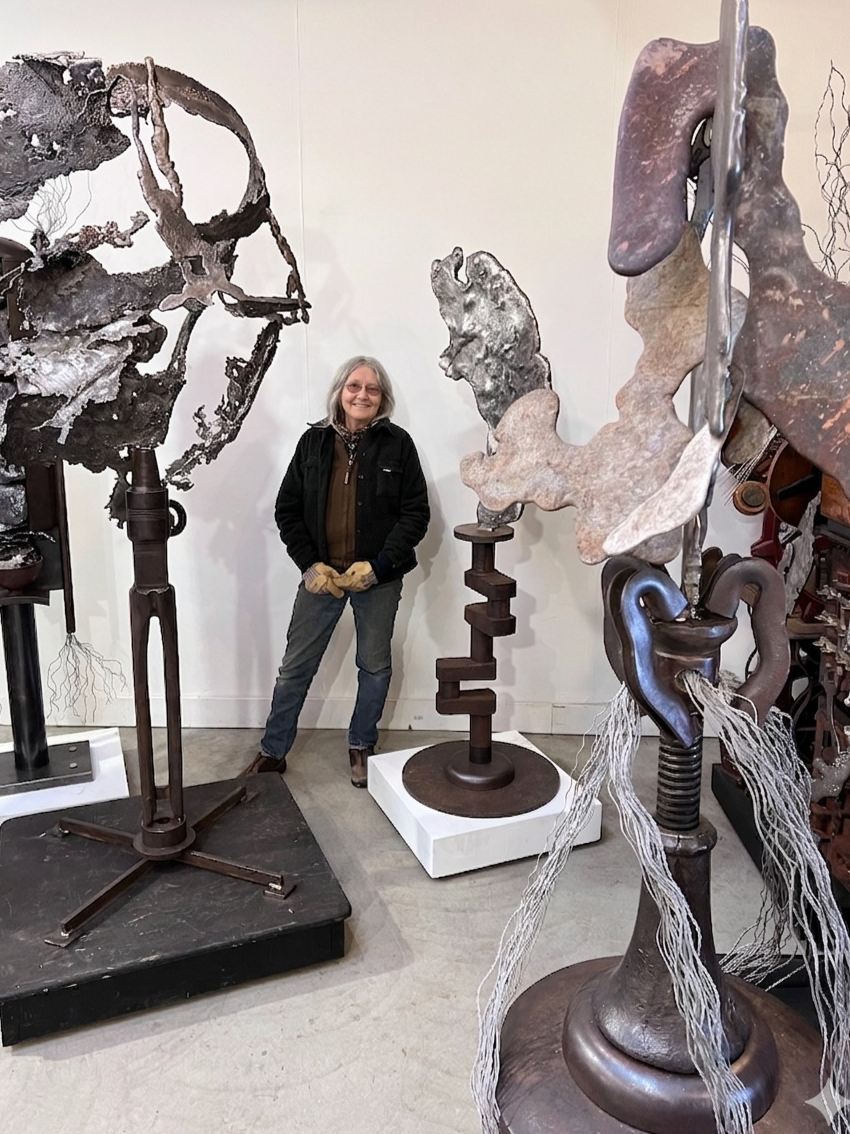
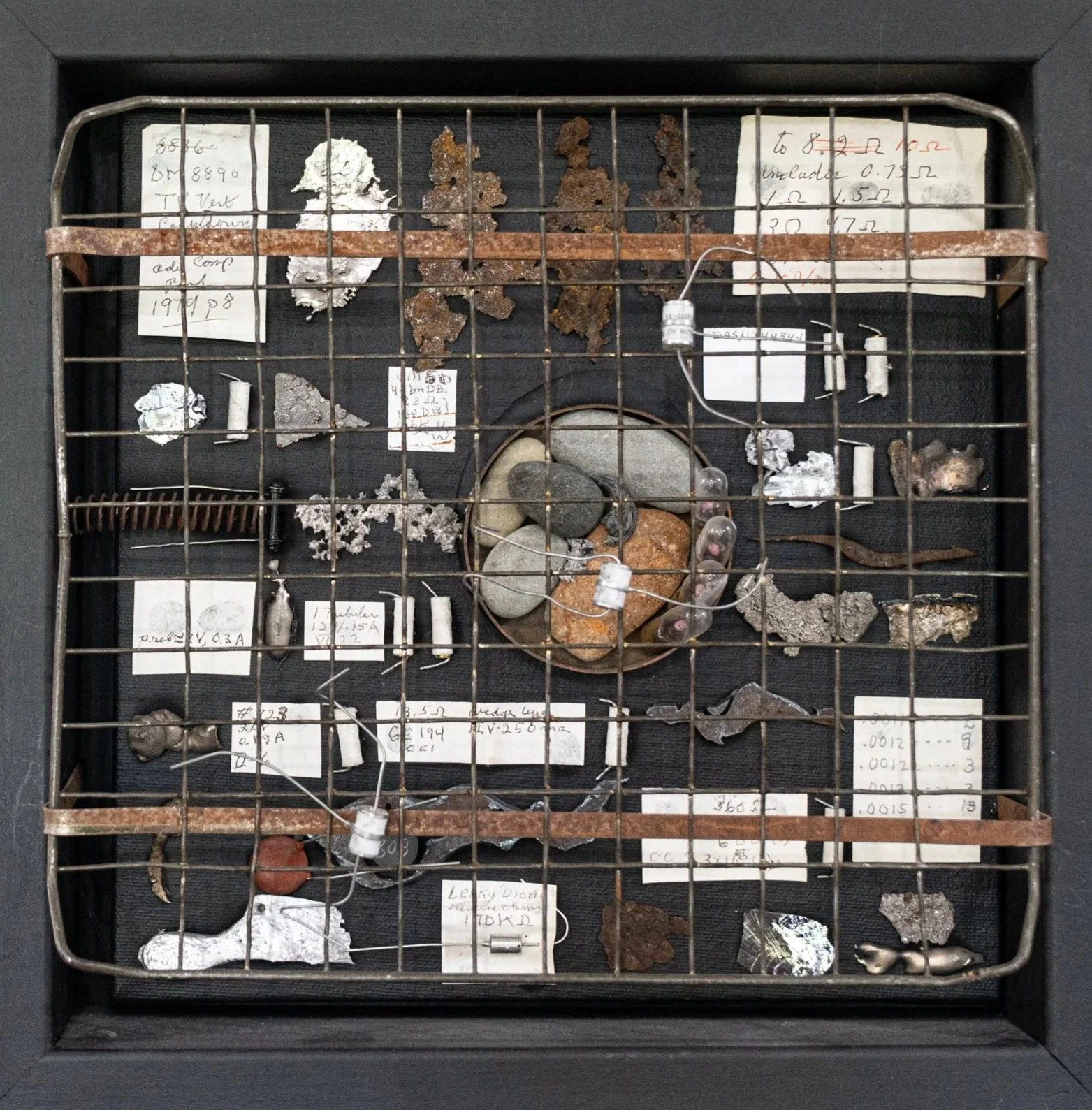
Mary Pat Wager is a sculptor whose work transforms found objects into layered, three-dimensional narratives.
She is drawn to materials that carry memory — gathering, disassembling and reinventing them into forms that evoke nostalgia, honor forgotten histories and create unexpected connections with those who encounter them. Her sculptures collapse past and present, weaving recollection into contemporary story.

Wager's foundation in the field is deeply rooted in mentorship and scholarship. While completing her master's degree at the University at Albany, she served as teaching assistant to Richard Stankiewicz — the world-renowned pioneer of junk sculpture. In the 1980s, she went on to become a master teacher of visual arts with the New York State Institute for the Arts in Education, and has held teaching positions at institutions including Sage Colleges, St. Rose College and the Girls Academy. For many years she also served as an art educator in the Averill Park School District, where she taught across disciplines with a specialty in ceramics and sculpture.
Her work has been exhibited nationally and internationally and is held in numerous public and private collections. Exhibition venues include the Herbert F. Johnson Museum at Cornell University, Skidmore College, the Hyde Collection, the Woodstock and Cooperstown Art Associations, Kirby Art Center in Princeton, Franze Badder Gallery in Washington D.C. and institutions in Budapest, Hungary — where her work was selected to represent the United States in the International Sculpture Exhibition. Her large-scale pieces have appeared at sculpture parks and public sites including Chesterwood in Stockbridge, MA; Sculpture Now in Lenox, MA; Ten Broeck Mansion in Albany; and Sculpture in the Streets, also in Albany.
Wager has received numerous honors for her sculpture practice, including a grant from the National Endowment for the Arts. She lives and maintains an active studio in upstate New York.
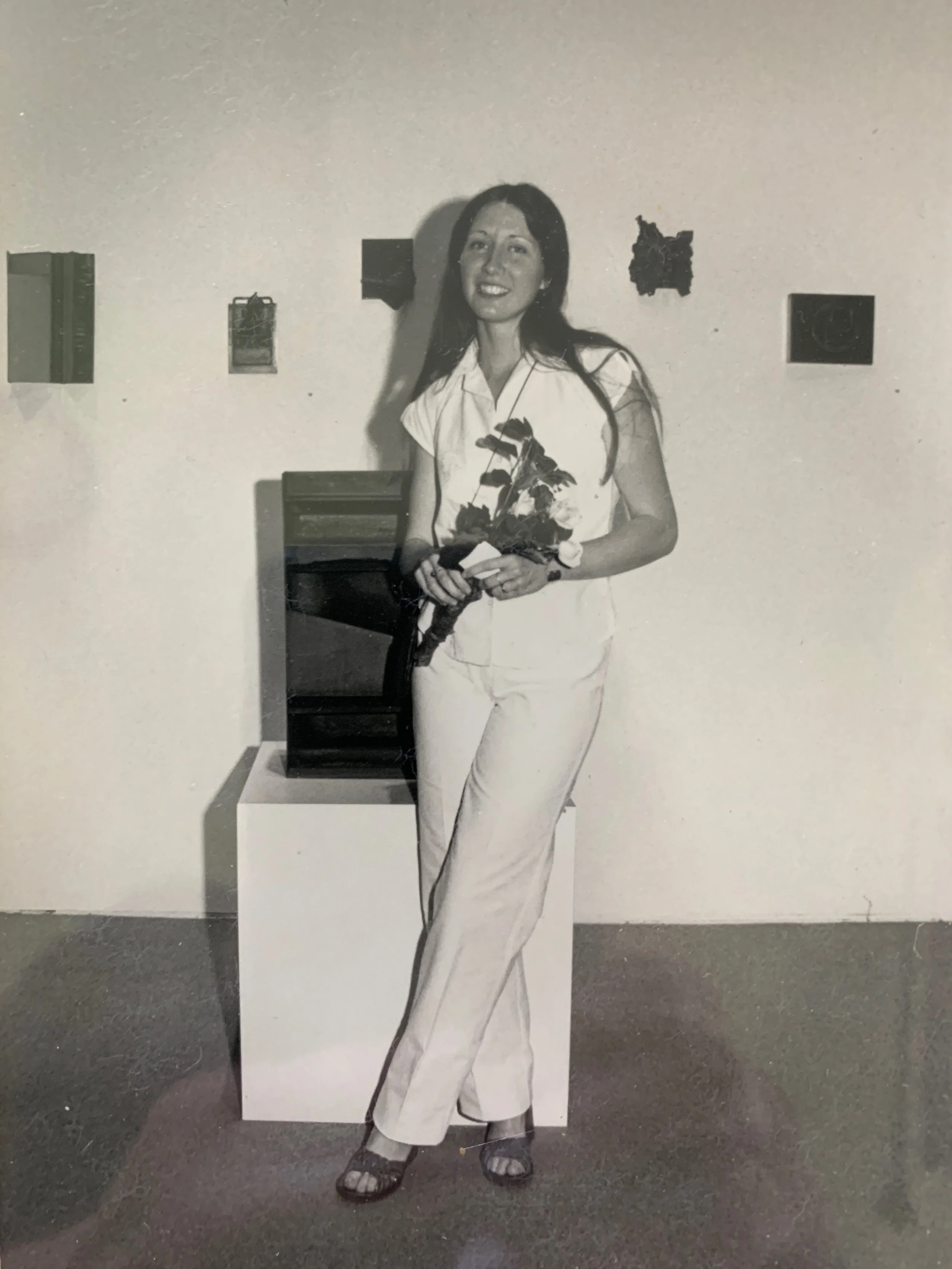
Mary Pat Wager at her MFA exhibition, State University of New York at Albany, 1979. Forty-six years of studio practice would follow.
For exhibition inquiries, press, or commissions, get in touch here.